01
A Profound Legacy of Visual Storytelling in Kurdistan
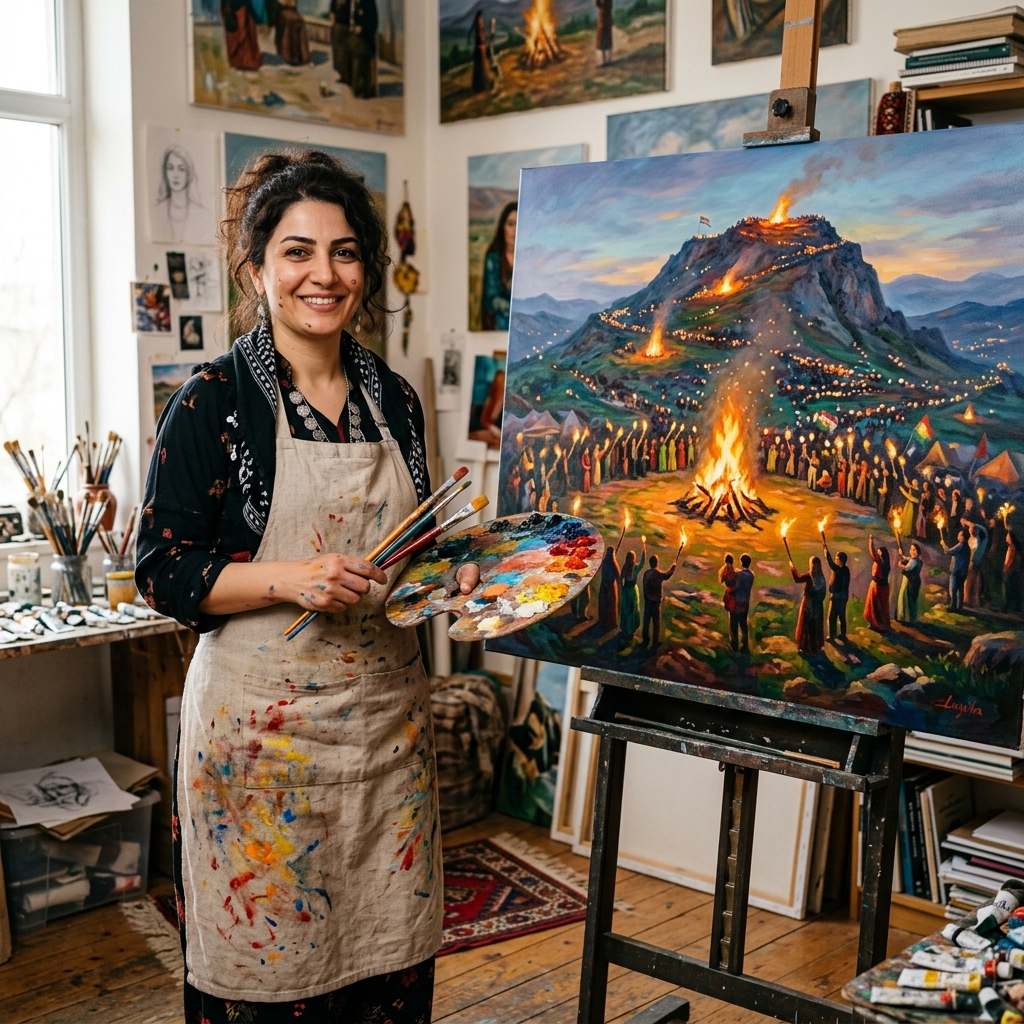
Visual art in Kurdistan is a powerful and deeply evocative medium that intertwines ancestral memory, breathtaking natural geography, and an unquenchable passion for freedom. For generations, Kurdish visual artists (Hunermend) have transformed the dramatic limestone peaks of the Zagros mountains, epic literary romances such as Mem û Zîn, and poignant historical struggles into luminous oil canvases, monumental stone sculptures, and vibrant public murals that celebrate human resilience and cultural rebirth. Kurdish visual art draws deeply from the ancient rock reliefs of Darband-i Gawr and the ornamental motifs of Kurdish kilims, translating millennia of Zagros visual iconography into contemporary figurative and abstract canvases. Kurdish visual art draws deeply from the ancient rock reliefs of Darband-i Gawr and the ornamental motifs of Kurdish kilims, translating millennia of Zagros visual iconography into contemporary figurative and abstract canvases.
02
Symbolism of the Kurdish Color Palette and Iconic Motifs
Kurdish painting is immediately distinguished by its fearless, brilliant use of color. Drawing direct aesthetic inspiration from hand-woven tribal kilims and the wildflower blooms that carpet mountain valleys in spring, artists work with vibrant cadmium yellows symbolizing the 21-rayed Kurdish sun, deep madder reds representing sacrifice and life force, rich emerald greens honoring fertile mountain slopes, and pure whites evoking mountain snowpacks. Iconic scenes—such as circles of women in flowing dresses dancing around blazing Newroz bonfires atop Mount Goyzha—serve as enduring symbols of communal solidarity and hope. In mountain studios across Hawraman and Badinan, artists extract natural pigments from crushed pomegranate rinds, wild madder root, walnut shells, and ochre clay, infusing their artworks with the physical minerals of the Zagros mountains. This organic tactile connection between the land and the canvas ensures that every brushstroke is an authentic reflection of Kurdish geological and botanical history. In mountain studios across Hawraman and Badinan, artists extract natural pigments from crushed pomegranate rinds, wild madder root, walnut shells, and ochre clay, infusing their artworks with the physical minerals of the Zagros mountains. This organic tactile connection between the land and the canvas ensures that every brushstroke is an authentic reflection of Kurdish geological and botanical history.
03
Sulaymani and Erbil: Thriving Sanctuaries of Creative Innovation
The Institute of Fine Arts in Sulaymani—long celebrated as the cultural and literary capital of Kurdistan—together with vibrant modern art galleries and cultural foundations in Erbil and Duhok, has nurtured generations of internationally renowned painters and sculptors. Art studios hum with creative energy, where revered master artists mentor young students in classical figurative oil painting, contemporary abstract expressionism, and monumental public bronze casting commemorating Kurdish literary giants, musicians, and martyrs.
04
Global Art Biennales and Contemporary Cultural Renaissance
In the 21st century, Kurdish contemporary artists regularly exhibit their work at prestigious international venues including the Venice Biennale, Documenta, and contemporary art fairs in London, Paris, Berlin, and Dubai. Through conceptual installations, digital video art, and large-scale interactive sculptures, they communicate universal themes of human dignity, ecological stewardship, and cultural resilience through the deeply authentic and poignant lens of Kurdish artistic heritage. Public art festivals in Sulaymani, Erbil, and Duhok transform historic city walls into open-air galleries, where monumental murals celebrate the unity of Kurdish people, gender equality, peace, and the timeless beauty of the Zagros landscape. Public art festivals in Sulaymani, Erbil, and Duhok transform historic city walls into open-air galleries, where monumental murals celebrate the unity of Kurdish people, gender equality, peace, and the timeless beauty of the Zagros landscape.