01
Centuries of Artisanal Excellence in Kurdish Mountain Guilds
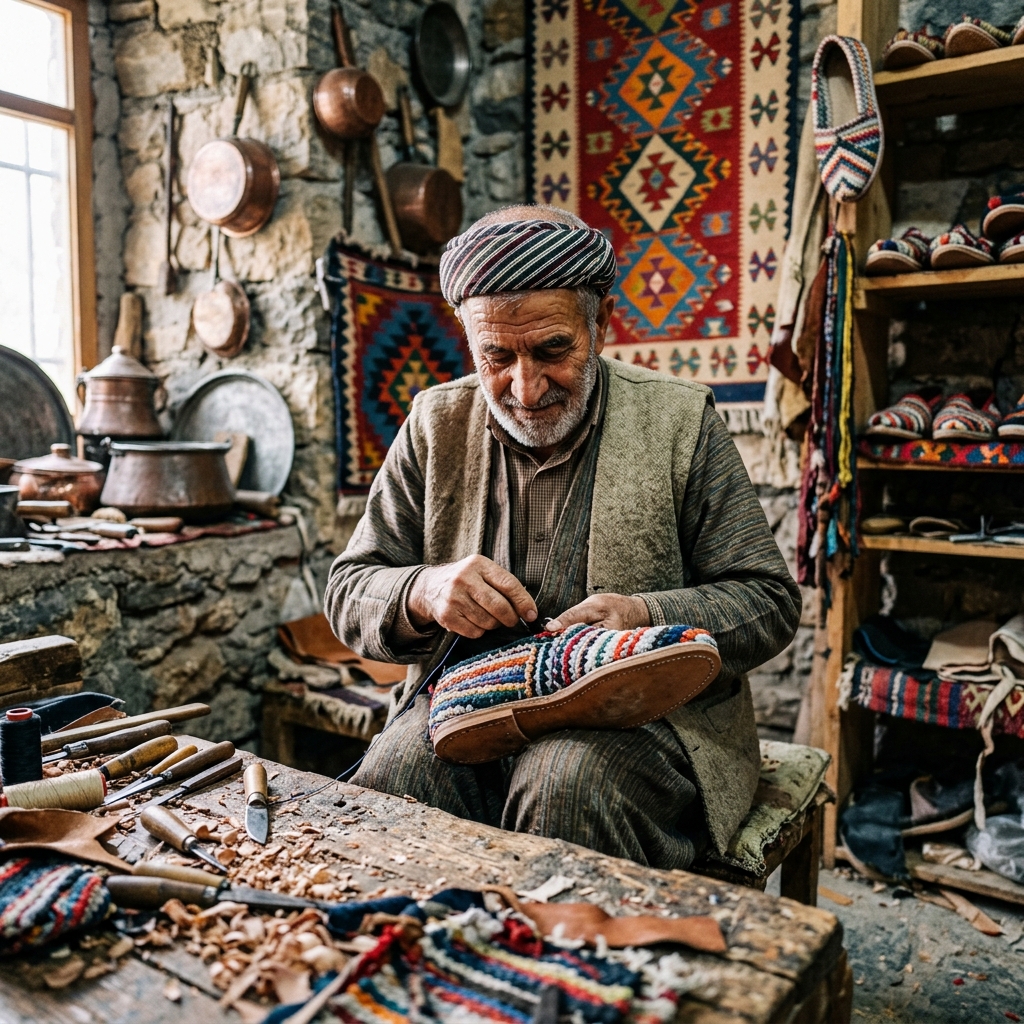
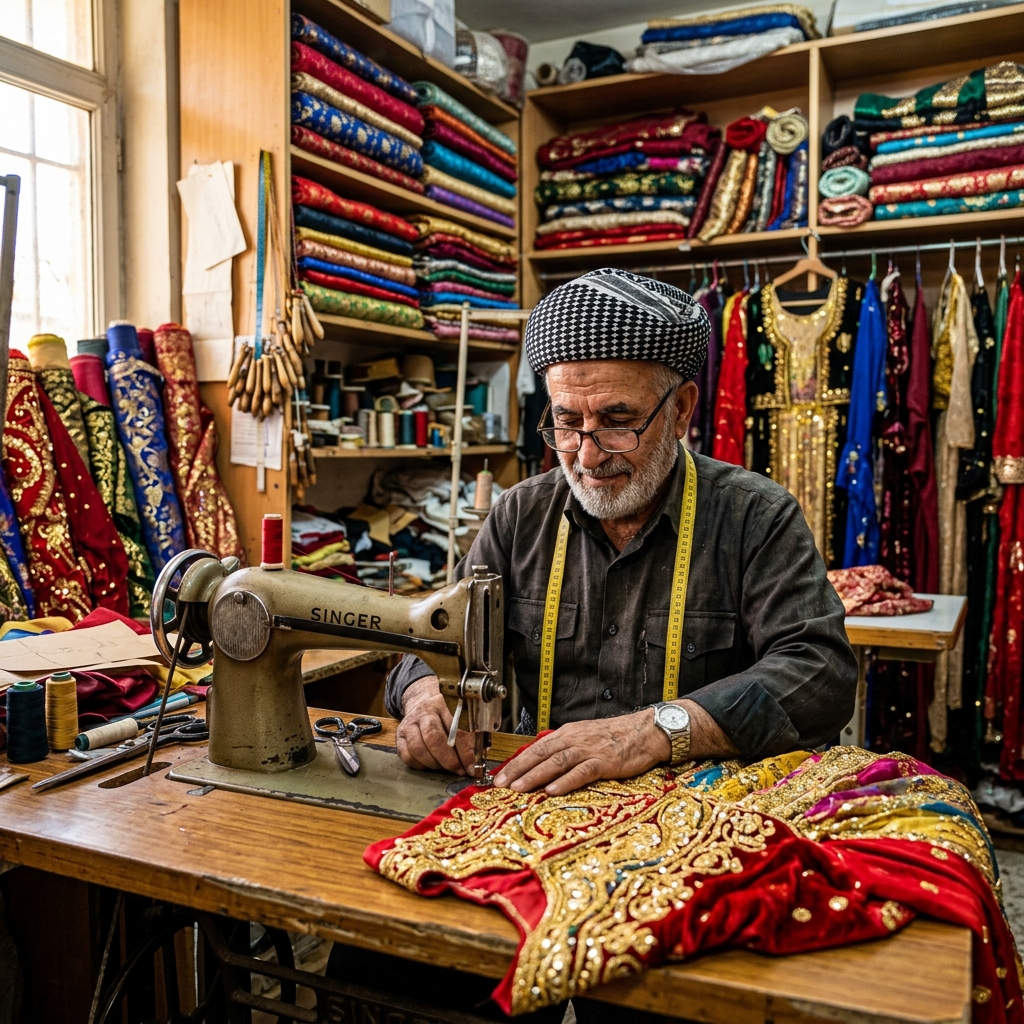
Kurdish craftsmanship is an extraordinary living testament to human patience, artistic refinement, and practical mastery of natural materials. In historic workshops nestled in the stone mountain villages of Hawraman and ancient bazaar quarters of Erbil, Sulaymani, and Duhok, master artisans (Destkar / Pîşeger) have spent lifetimes perfecting handcrafting traditions passed down uninterrupted across dozens of generations. The creation of a single pair of authentic Hawrami Klash shoes requires up to forty hours of meticulous manual labor by multiple specialized artisans, from rag cutters to sole compactors and crocheters. The creation of a single pair of authentic Hawrami Klash shoes requires up to forty hours of meticulous manual labor by multiple specialized artisans, from rag cutters to sole compactors and crocheters.
02
The UNESCO Masterpiece of Hawrami Klash Woven Shoes
The most internationally acclaimed Kurdish craft is Klash—the iconic, lightweight white footwear handmade exclusively in the steep mountain villages of Hawraman (such as Tawella and Byara). Crafted entirely from natural materials without synthetic glue or chemical dyes, the sole is made from thousands of tightly compressed vertical layers of cotton rags bound with rawhide strips, while the upper is hand-crocheted from pure white cotton thread. Exceptionally breathable, flexible, and durable on rugged mountain terrain, Klash shoes have no left or right foot—they naturally mold to the wearer’s feet over time. The UNESCO inscription of Hawraman’s cultural landscape brought international prestige to traditional Kurdish craftsmanship. Master Klash shoe makers and kilim weavers now host international workshops, teaching traditional natural dyeing, warp knotting, and hand-crocheting to international art scholars and collectors from around the world. The UNESCO inscription of Hawraman’s cultural landscape brought international prestige to traditional Kurdish craftsmanship. Master Klash shoe makers and kilim weavers now host international workshops, teaching traditional natural dyeing, warp knotting, and hand-crocheting to international art scholars and collectors from around the world.
03
Hand-Knotted Kurdish Carpets, Kilims, and Coppersmithing
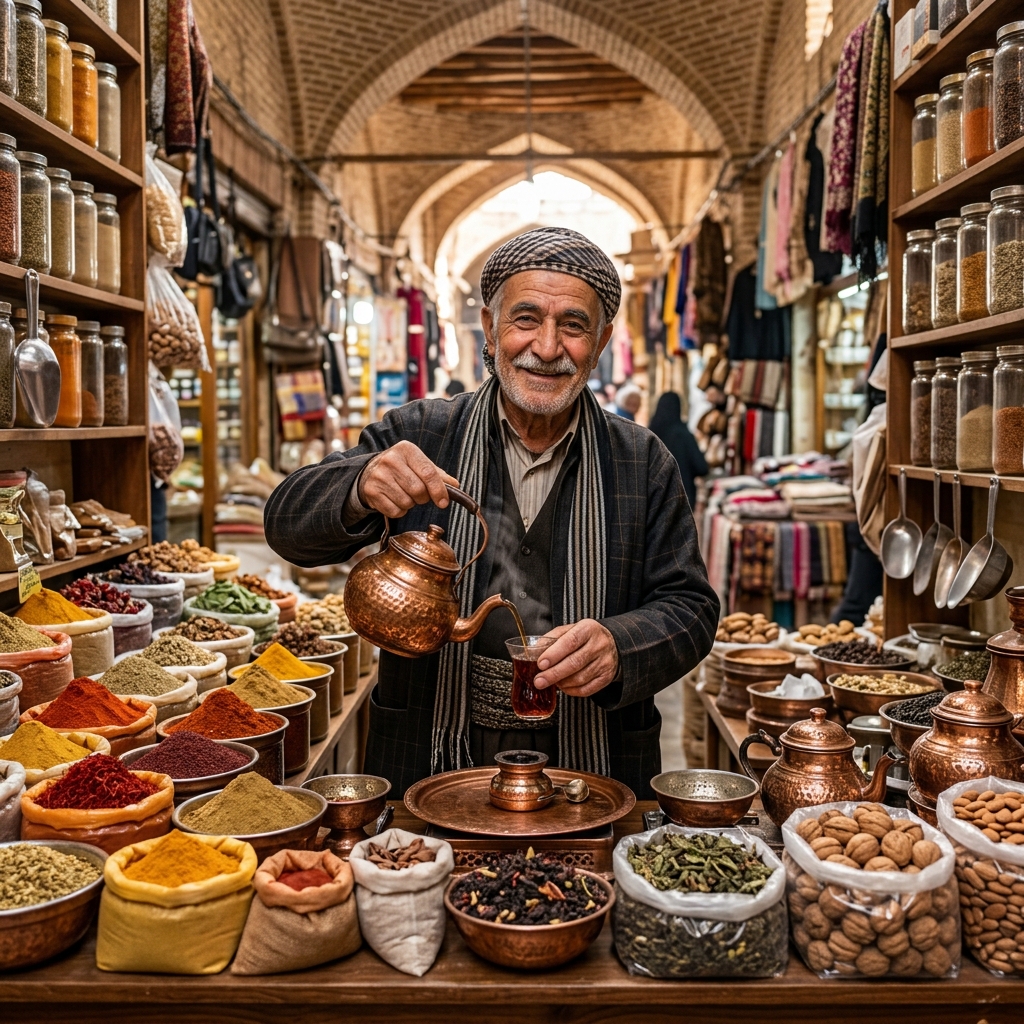
In textile workshops across Senna, Bijar, and Garmian, master weavers knot world-renowned Kurdish carpets celebrated for their dense knots, geometric Zagros diamonds, stylized ram horns, and vibrant plant dyes derived from madder roots, walnut husks, and wild chamomile. Nearby, coppersmiths (Misger) shape gleaming sheets of raw copper with rhythmic hammer blows into ornate tea samovars, platters, and coffee pots.
04
UNESCO Inscription, Fair-Trade Cooperatives, and Global Markets
With Hawraman’s official inscription on the UNESCO World Heritage list, Kurdish handmade crafts are experiencing a tremendous global renaissance. Fair-trade artisan cooperatives allow village craftsmen to export authentic Klash, hand-carved walnut chessboards, and hand-knotted kilims directly to collectors in Tokyo, New York, and London, preserving these invaluable ancestral arts for generations to come. Kurdish coppersmiths and woodcarvers incorporate intricate floral and geometric motifs that mirror ancient Mede and Zagros artifacts, creating heirloom tea sets and carved jewelry chests that last for generations. Kurdish coppersmiths and woodcarvers incorporate intricate floral and geometric motifs that mirror ancient Mede and Zagros artifacts, creating heirloom tea sets and carved jewelry chests that last for generations.