01
The Ancient Mountain Pastoralism of the Kurdish Koçer
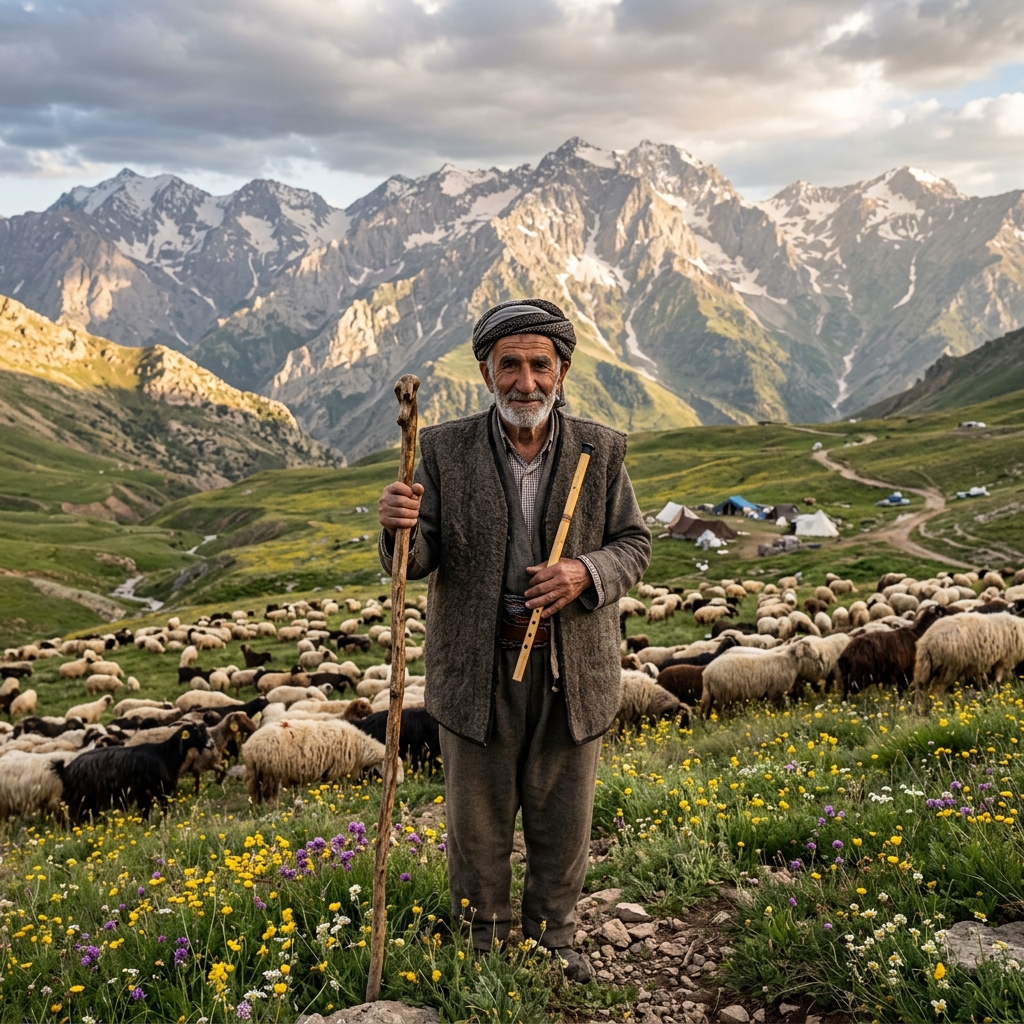
The Kurdish shepherd (Şivan / Shwan) is the ultimate living symbol of mountain endurance, independence, and pastoral heritage. For thousands of years, Kurdish pastoralist communities have practiced seasonal transhumance (Koçerî). As spring snows melt and alpine meadows bloom into vibrant carpets of wild narcissus and clover, shepherds guide massive flocks of sheep and Angora goats from winter lowlands up to the high Zagros alpine pastures known as Zozan, living under traditional black goat-hair tents. The shepherd’s knowledge of mountain star constellations, wind patterns, and alpine flora allows them to predict mountain weather days in advance, ensuring the safety of thousands of grazing livestock. The shepherd’s knowledge of mountain star constellations, wind patterns, and alpine flora allows them to predict mountain weather days in advance, ensuring the safety of thousands of grazing livestock.
02
The Legendary Peshdar Shepherd Dog: Guardian of the Flock
Life on high mountain ridges demands extraordinary courage and mountaineering skill. Shepherds navigate sheer limestone cliffs, sudden alpine thunderstorms, and freezing night temperatures. Protecting the herd from Zagros wolves, brown bears, and leopards is the formidable Peshdar Dog (Kurdish Mastiff)—one of the world's oldest and most powerful livestock guardian breeds. Renowned for fearless bravery in combat against predators, the Peshdar is equally famous for its gentle, protective demeanor around village children. The pastoral cycle in the high Zozan pastures is also a time of vibrant social gathering for semi-nomadic communities. Families pitch traditional goat-hair tents, churn fresh sheep butter in goatskin vessels (Mesk), and gather around evening campfires under starlit skies to share legendary folk tales and pastoral songs that have echoed across the Zagros for thousands of years. The pastoral cycle in the high Zozan pastures is also a time of vibrant social gathering for semi-nomadic communities. Families pitch traditional goat-hair tents, churn fresh sheep butter in goatskin vessels (Mesk), and gather around evening campfires under starlit skies to share legendary folk tales and pastoral songs that have echoed across the Zagros for thousands of years.
03
The Soulful Mountain Music of the Shepherd’s Flute (Bilûr)
In the serene solitude of the mountain peaks, the shepherd’s constant companion is the Bilûr—an end-blown flute carved from mountain wood or reed. The soulful melodies played by the shepherd (Neway Şiwanî) are deeply evocative, echoing the whispering mountain winds, rushing glacial streams, and the gentle bells of the grazing flock. According to Kurdish mountain folklore, the soothing acoustic tones of the Bilûr calm restless sheep and encourage grazing ewes to produce sweeter, richer milk.
04
Sustaining Kurdistan's Dairy, Cheese, and Wool Heritage
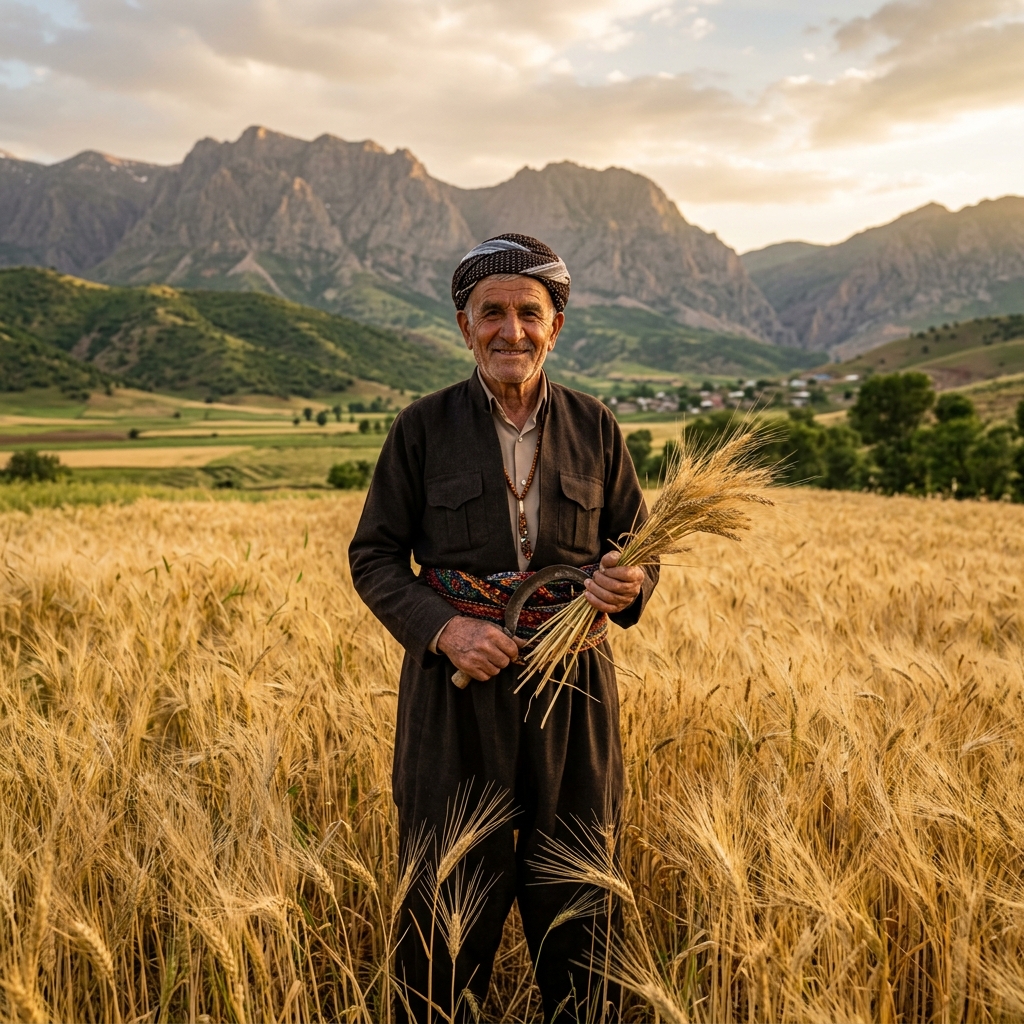
The tireless labor of the Kurdish shepherd provides the raw foundation for Kurdistan’s world-renowned dairy traditions. Milk harvested from alpine-fed sheep produces creamy Kurdish yogurt (Mast), clarified butter (Ronî Kurdî), brined goat cheeses, and the durable, lanolin-rich wool spun by village women to weave magnificent Kurdish tribal kilims. The Şivan remains an eternal pillar of mountain freedom, resilience, and cultural dignity. Semi-nomadic pastoralism remains vital to the mountain ecosystem, as rotational grazing naturally aerates mountain soil, disperses native wildflower seeds, and prevents overgrown brush fires during dry summer months. Semi-nomadic pastoralism remains vital to the mountain ecosystem, as rotational grazing naturally aerates mountain soil, disperses native wildflower seeds, and prevents overgrown brush fires during dry summer months.